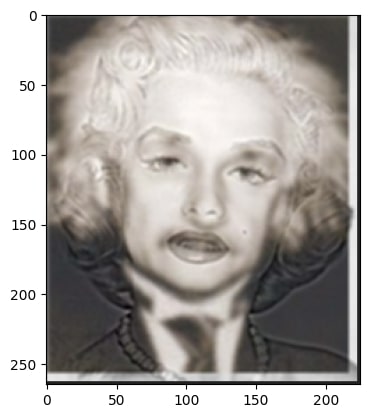
About the Hybrid Images Project
Motivation: The Hybrid Images project explores the fusion of low and high-frequency visual information from two distinct images to create a single hybrid image. This innovative approach allows viewers to perceive different interpretations of the same image depending on their viewing distance. The project aims to highlight how human vision processes global structures (low frequency) and local details (high frequency) seamlessly.
Inspiration: Inspired by the work of Oliva et al. (2006), this project leverages image processing techniques to blend global and local visual cues, showcasing how distance and frequency manipulation can change image perception dynamically.
Technical Overview
Process Flow
- Image Selection and Preprocessing: Carefully selected images with distinct interpretations, aligned for coherent blending.
- Frequency Separation: Applied low-pass filtering on the first image for global structures and high-pass filtering on the second image for local details.
- Hybrid Image Formation: Combined processed images with optimized frequency cutoffs and blending parameters.
Techniques and Tools
- Programming: Python and OpenCV libraries.
- Filtering Methods: Laplacian Pyramid and Gaussian Filtering for frequency separation.
- Visualization: Frequency domain analysis and alignment techniques.
Results
- Created hybrid images with distinct global and local interpretations.
- Seamless combination of high and low-frequency components ensuring clarity at varying distances.
- Validated human visual multi-scale analysis principles effectively.
Challenges and Solutions
- Accurate Alignment: Edge detection and alignment algorithms ensured precise blending.
- Frequency Balance: Tuned cutoff parameters iteratively and validated results visually.
Technologies Used
- Programming: Python.
- Libraries: OpenCV, NumPy, and Matplotlib.
- Algorithms: Frequency filtering using Gaussian and Laplacian filters.
Future Scope
- Multi-Image Hybridization: Investigating more than two images with advanced filters.
- Enhanced Edge Alignment: Further improvements in image blending quality.
- Dynamic Adjustments: Real-time blending and adaptive filtering for interactive visualizations.
GitHub Repository
Explore the project on GitHub: Multi-Scale Visual Processing Project Repository